Finding the Third Space
人をつなぐ力 ― 異文化理解の大切さ

Culture Connects Us
Part 3: Closing Thoughts on 文化 (Culture)based on the talk at the training session.
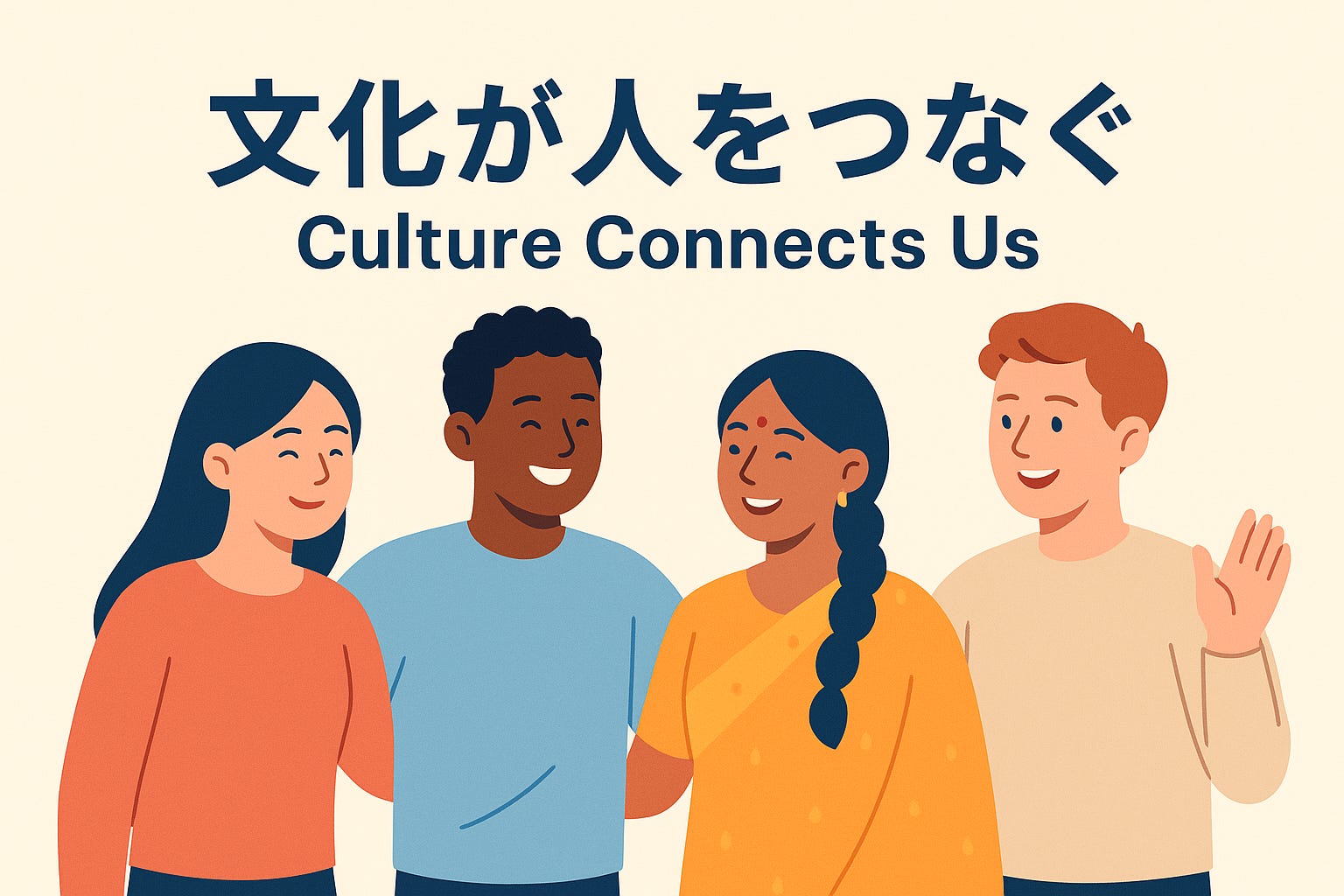
Have you ever heard the term intercultural understanding?
It means recognising and respecting cultural differences while interacting flexibly with others. For me, this idea connects closely with language learning, not just memorising words, but using them to create real understanding.
Culture has visible aspects like food, clothing, and language and invisible ones such as values, ways of thinking, and manners. True communication requires noticing these invisible parts. But learning culture only as “knowledge” is not enough. What matters is developing the curiosity and imagination to see through another person’s cultural lens.
The Cultural Lens We All Wear
We all see the world through a “lens” shaped by culture and experience. Without noticing it, our messages can easily get distorted. Yet beneath surface differences, people share common needs, like wanting not to offend others. As in the Cultural Island Model, cultures may look different on the outside, but at the core, human values often overlap. Recognising these invisible commonalities is what makes real respect and connection possible.
The Third Space
Intercultural understanding doesn’t mean abandoning your own culture. It’s about creating a flexible “third space” where both sides can feel comfortable. People with this skill tend to:
Find differences interesting, not threatening
Try to understand before judging
Keep communicating, even when it’s hard
Look for multiple perspectives and common ground
These attitudes matter not just in international settings but also in everyday relationships.
My Reflection
I was born in India, married across cultures, learned Japanese, met people from many countries, and moved to Malaysia 15 years ago. I thought that after living abroad, I was
well-equipped for intercultural communication. Yet in Japan, working with 43 people from 21 countries, I realised that speaking a common language wasn’t enough. Subtle cultural differences led to what I now call “invisible misunderstandings.”
If I had known this earlier, I could have built deeper, smoother relationships. I’ve learned that intercultural communication isn’t about avoiding mistakes, it’s about building real connections with curiosity, humility, and courage.
Looking Ahead
Today, we meet people from diverse backgrounds everywhere, at school, at work, in families, or in our neighbourhoods. Intercultural understanding is no longer optional; it’s an essential life skill. It helps us live more meaningfully with others, not just peacefully.
Closing Note
As both a learner and a teacher, I know I still have much to learn. Step by step, I hope to adopt these values and one day be able to share them with others. I want not only to connect cultures, but also to be careful not to create stereotypes through language.
What Do You Think?
How do you react when you encounter differences?
Have you ever found a “third space” between cultures?
What can we do to strengthen our intercultural understanding?
I’d love to hear your thoughts and experiences. Please feel free to share them in the comments.
Thank you so much for taking the time to read!
文化は人をつなぐ
パート3:文化についてのまとめ
「異文化理解」という言葉を聞いたことがありますか。これは、文化のちがいを認めて、相手を尊重しながら、柔軟にやりとりすることです。私にとって、この考えは言語学習とも深くつながっています。ことばをただ暗記するのではなく、本当に「わかり合う」ために使うことです。
文化には、食べ物・服・言葉のような「見える部分」と、考え方・価値観・マナーのような「見えない部分」があります。ほんとうのコミュニケーションには、この見えない部分に気づくことが大切です。でも文化を「知識」として学ぶだけでは足りません。大事なのは、相手の文化を想像して見ようとする好奇心と心です。
文化のレンズ
私たちはみんな、自分の文化や経験からできた「レンズ」を通して世界を見ています。気づかないと、ことばや気持ちが正しく伝わらないこともあります。でも、ちがいの下には共通点もたくさんあります。たとえば「相手を傷つけたくない」という気持ちは、どの文化にもあります。「文化の島モデル」のように、外から見ると文化はちがって見えますが、心の中には同じような価値が重なっています。こうした「見えない共通点」に気づくことで、本当の尊重やつながりが生まれるのです。
第三の場所
異文化理解とは、自分の文化をすてることではありません。相手と自分、どちらも安心できる
「第三の場所」をつくることです。この力を持っている人は:
ちがいをおもしろいと思う
判断する前に理解しようとする
むずかしくても対話をつづける
いろいろな見方や共通点を探す
こうした態度は、国際交流だけでなく、毎日の人間関係にも大切です。
私の体験
私はインドに生まれ、ちがう州の人と結婚し、日本語を学び、多くの国の人と出会い、15年前にマレーシアに移りました。長く海外で生活したので、異文化コミュニケーションに自信があると思っていました。
しかし日本で、21か国43人と一緒に働いたとき、共通の言語があっても十分ではないと気づきました。英語や日本語を使っていても、文化のちがいから「見えない誤解」が生まれるのです。
もしもっと早くこのことを知っていたら、もっと深く、スムーズな人間関係がつくれたと思います。私は学びました。異文化コミュニケーションは「まちがいをしないこと」ではなく、「ほんとうのつながり」をつくることなのです。そのためには、好奇心、謙虚な心、そして勇気が必要です。
これから
今は学校でも、職場でも、家族や近所でも、多文化の人と出会うことが多いです。だから異文化理解は特別なものではなく、生活に欠かせないスキルです。これはただ「平和に生きる」ためではなく、「より深く人と生きる」ための力です。
クロージングノート
私は学習者としても教師としても、まだまだ学ぶことが多いと思います。少しずつこの価値を身につけて、いつか人に伝えられるようになりたいです。文化をつなぐだけでなく、ことばを通してステレオタイプを作らないように気をつけていきたいと思います。
みなさんはどう思いますか?
文化のちがいに出会ったとき、どう感じますか?
「第三の場所」を見つけたことはありますか?
異文化理解を強くするために、私たちは何ができるでしょうか?
みなさんの考えや体験を、ぜひコメントでシェアしていただけるとうれしいです。
いつも読んでいただき、ありがとうございます!
「文化のレンズ」、すごくわかりやすい表現ですね。私もそのレンズを少しずつ磨いていきたいです。
相手の文化を理解するには、まず 「合う」の心 を大切にすること。
相手と 会って話し合い、意見を交換し合い、異文化を学び合い、価値観を尊重し合う。
その結果、互いに 理解し合える関係 が築けるのではないかと思います。