「日本語お上手ですね」
The value of the process & the connection over perfection

「日本語お上手ですね。」
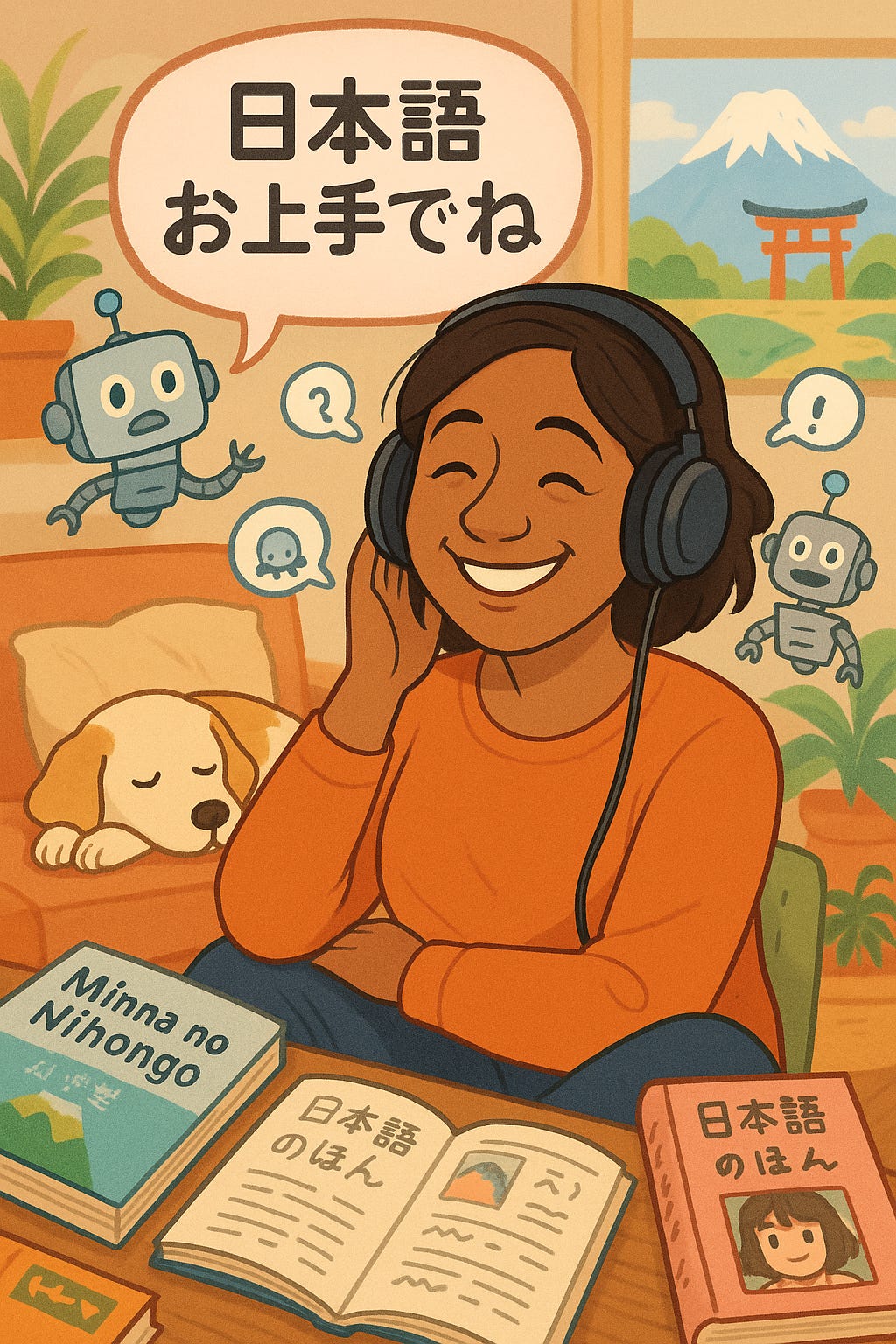
この優しいコメントを、日本語学習者なら一度はもらったことがあるのではないでしょうか。そう言ってくださる日本人の方々には、心から感謝しています。思うように話せなくて落ち込んだとき、この言葉に救われたこと、みなさんもありませんか?
もちろん、それが励ましの言葉だと分かっていても、「わあ、私、ついに日本語マスターしたかも!」と天狗になりかけたこともありました。でも、自分の会話を録音して聞き返してみると……「これは外国語訓練中のロボット?」とツッコミたくなるような声と、文法ミスのオンパレード。やっぱり「お上手」には程遠いなあ、と実感させられるのです。
そもそも「お上手」とは、どこまでを指すのでしょう? ネイティブレベル? 『源氏物語』が読める? それとも寿司屋で注文が通じる程度? その答えはきっと人それぞれですよね。
言語に「お上手」を求めていた頃
私が初めて「言語はお上手じゃなくちゃ」と思ったのは、15年前の日本でのこと。英語教師として日本の高校に行ったときです。先生方やご近所の方々が英語でメールを書いたりしているのを見て「すごい!」と思ったのも束の間、みんな「英語はまだまだです」「もっと勉強しないと」と謙遜されるのです。いやいや、読めるし書けるし、話せるし聞けるじゃないですか! と思いましたが、よく考えると、自分も日本語について同じように感じていることに気づきました。
私の母語? どこに行った?
ちなみに、私の母語はタミル語なのですが、使うのは親と話すときくらいで、それも片言です。文字は読めませんし、「母語」と呼んでいいのか迷うレベルです。実家ではカンナダ語も話されていましたが、こちらも日常会話がやっと。ヒンディー語は高校まで学びましたが、それ以降は夫との会話くらい。そして、一番得意なはずの英語でさえ、シェイクスピアを読むと「なんだか呪文かな?」と思ってしまう始末です。
そんな私が日本語を学び始めたのは20年前。「ちょっと友達と話せたらいいな」くらいの軽い気持ちでした。でも気づけば映画や漫画、小説に手を伸ばすようになり、漢字の壁や語彙の足りなさに打ちのめされました。「まだまだだな」と思うことばかりです。
「お上手」を目指さず、笑いながら
正直、日本語の勉強を20年も続けている自分を「進みが遅すぎる!」と笑いたくなることもあります。でも、そのおかげで気づいたこともあります。それは、「お上手」を目指さなくても、楽しい道のりがあるということ。片言でも、日本語で笑い合えた瞬間のほうが、むしろ心に残るのです。
今はこうして日本語で書いたり、日本人の友達と話したり、絵本や物語を読んだりするのが日常です。時にはポッドキャストを聞きながら、「これぐらいでお上手なの?」と疑問を持つ瞬間もありますが、それでも楽しい瞬間です。
言語を「お上手」にするのは素晴らしい目標ですが、その過程での失敗や笑いを楽しむのも大切だと思います。片言でも会話が弾む喜びや、伝わったときの感動。それは何にも代えられない財産です。だから、みなさんもぜひ「お上手じゃなくても、まずは楽しむ」をモットーにしてみてはいかがでしょうか? きっと、思い出に残る出会いが増えると思います。
必ず(かならず)- certainly, without fail【N4】
習慣(しゅうかん)- habit【N4】
学習者(がくしゅうしゃ)- learner【N4】
感謝(かんしゃ)- gratitude, appreciation【N4】
落ち込む(おちこむ)- to feel down, depressed【N3】
励まし(はげまし)- encouragement【N3】
天狗(てんぐ)になる - to become conceited【N2(表現)】
録音(ろくおん)- recording【N4】
聞き返す(ききかえす)- to listen again【N3】
訓練(くんれん)- training【N3】
文法(ぶんぽう)- grammar【N4】
実感(じっかん)する - to realize, to feel strongly【N3】
指す(さす)- to indicate【N3】
程遠い(ほどとおい)- far from (a goal, state)【N2】
程度(ていど)- degree, level【N3】
目指す(めざす)- to aim for【N4】
教師(きょうし)- teacher (formal)【N4】
実家(じっか)- one’s parents’ home【N3】
得意(とくい)- be good at【N4】
呪文(じゅもん)- spell, incantation【N2】
気づく(きづく)- to notice【N4】
漫画(まんが)- comic, manga【N5】
小説(しょうせつ)- novel【N4】
語彙(ごい)- vocabulary【N3】
打ちのめされる(うちのめされる)- to be knocked down emotionally【N2】
進み(すすみ)- progress【N4】
日常(にちじょう)- everyday life【N4】
疑問(ぎもん)- doubt, question【N3】
弾む(はずむ)- to be lively, to bounce (conversation etc.)【N2】
財産(ざいさん)- asset, treasure【N3】
出会い(であい)- encounter【N4】
“Your Japanese is so good!”
“Your Japanese is so good!”
If you’re a learner of Japanese, chances are you’ve heard this kind and encouraging comment at least once. I’m truly grateful to the Japanese people who have said this to me. Haven’t you ever felt saved by these words when you were feeling down because you couldn’t express yourself the way you wanted?
Of course, even knowing it’s meant as encouragement, there were times I almost let it go to my head—“Wow, maybe I’ve finally mastered Japanese!” But then, I’d listen to a recording of myself speaking and think, “Wait, is this a robot in language training?” The voice full of strange intonation and a parade of grammar mistakes reminds me that I’m still far from being “good.”
But what does “good” even mean when it comes to language? Native-level fluency? Being able to read The Tale of Genji? Or just being understood at a sushi restaurant? I suppose the answer differs from person to person.
When I Thought I Had to Be “Good” at Languages
The first time I felt that I had to be “good” at a language was fifteen years ago in Japan. I was working at a Japanese high school as an English teacher. I was amazed to see teachers and neighbors writing emails in English, but before I could fully admire them, they would humbly say, “My English still needs a lot of work,” or “I have to study more.” I’d think, “No way—you can read, write, speak, and understand!” But then I realized I felt exactly the same way about my own Japanese.
My Mother Tongue? Where Did It Go?
By the way, my mother tongue is Tamil, but I only use it when speaking to my parents—and even then, it’s very limited. I can’t read the script, and I’m not sure if I can even call it my “mother tongue.” At home, we also spoke Kannada, but again, just enough for daily conversations. I studied Hindi until high school but haven’t used it since, aside from the occasional chat with my husband. Even in English, the language I’m supposed to be most proficient in, reading Shakespeare makes me feel like I’m deciphering spells.
It was twenty years ago that I started learning Japanese, with just a casual thought: “It’d be nice to talk with some Japanese friends.” Before I knew it, I was diving into movies, manga, and novels—only to be crushed by the wall of kanji and my lack of vocabulary. I constantly found myself thinking, “I’ve still got such a long way to go.”
Chasing “Fluency,” Let’s Enjoy the Process Instead
To be honest, there are times I want to laugh at myself for studying Japanese for twenty years and still progressing so slowly. But thanks to that, I’ve also come to a realization: even without aiming for “good,” the journey can be full of joy. In fact, the moments when I’ve laughed with someone in Japanese, even in broken sentences, are the ones that have stayed with me most.
Nowadays, it’s just part of my life to write in Japanese like this, talk with Japanese friends, and read picture books and stories. Sometimes I listen to podcasts and wonder, “Wait, this level counts as ‘good’?” But even those moments are fun in their own way.
Striving to be “good” at a language is a wonderful goal, but I think it’s just as important to enjoy the mistakes and laughter along the way. The joy of a lively conversation, even with broken grammar, and the thrill when you manage to get your message across—those are irreplaceable treasures.
So how about adopting the motto: “Even if I’m not good at it, I’ll enjoy it first”? I think you’ll find yourself with more memorable encounters that way.