「文化」とは何ですか?
見えるものと見えないもの

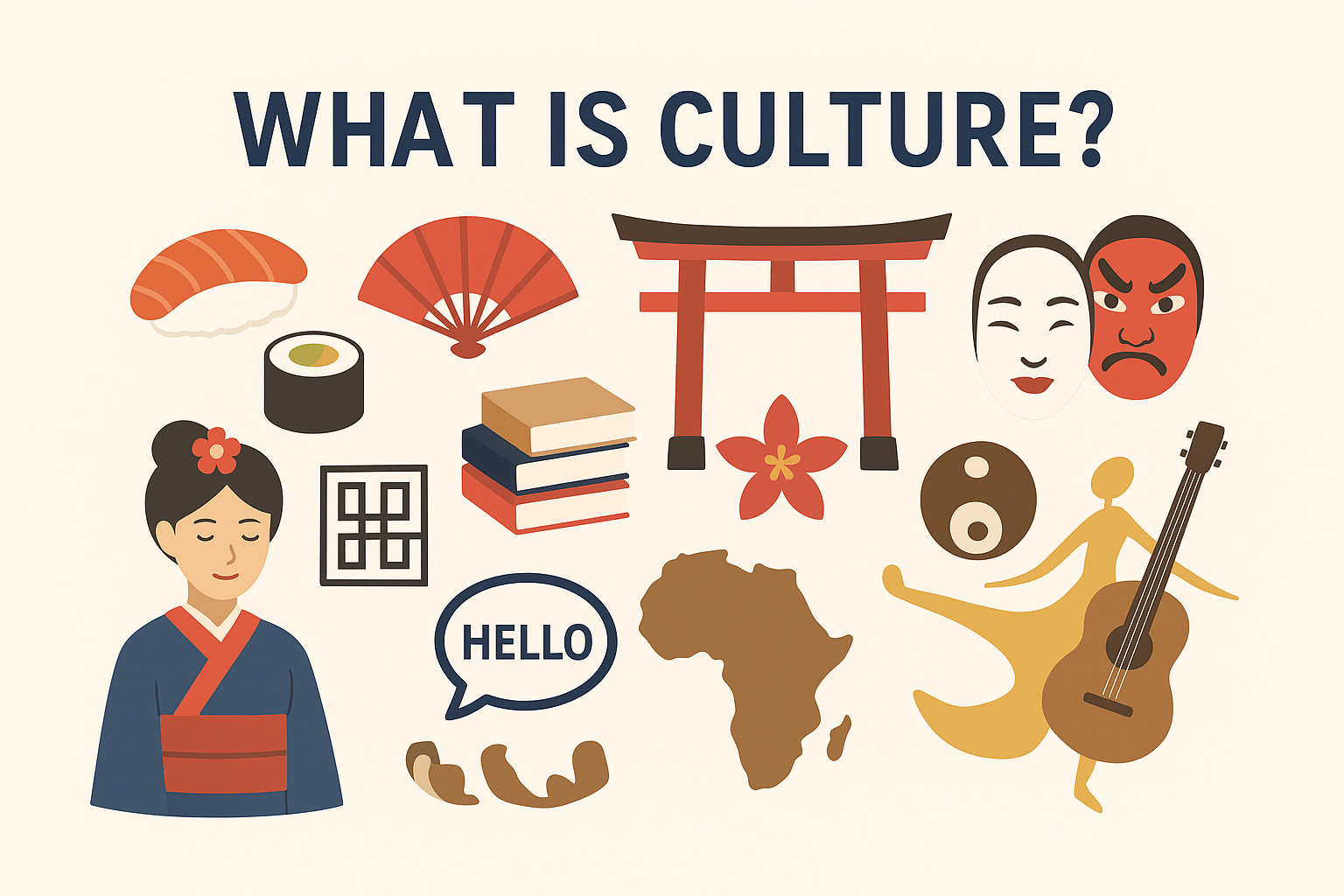
Recently, at a training for Japanese teachers, I listened to a talk about “culture” that really made me think. Today, I’d like to share a little of that with you.
When you hear the word culture, what comes to mind? For many, it might be sushi, kimono, anime, or kabuki. But defining culture is not so simple.
According to a survey, many people say they study Japanese because they are interested in Japanese culture. Manga, food, history there are many possible entry points. But what exactly is culture?
Big C Culture and small c culture
Big C Culture: literature, music, fine arts, performance arts
small c culture: greetings, eating habits, ways of speaking
Both are important parts of culture.
Visible and Invisible Culture
When travelling, we notice things like food or festivals, the “visible culture.”
But deeper aspects, such as values or ways of thinking, are not so easy to see.
Culture is often compared to an iceberg. The part above the water is small, while the much larger part lies hidden beneath the surface.
The Nature of Culture
Culture is born from nature, history, and daily life, and passed down to the next generation.
At the same time, major events such as wars or natural disasters can change it.
In this way, culture is something to be preserved, but also something that can change.
Culture doesn’t only belong to nations, it also exists in regions, companies, and schools. We often hear terms like “company culture” or “school culture.”
Metaphors for Culture
To explain culture, people often use metaphors like:
Air: always there, unnoticed, but essential.
Wind: invisible, but strongly felt.
A human face: small changes each day, but big differences over time.
In Summary
Culture is not only food or traditions.
It’s also the assumptions and ways of thinking that feel “natural” to us.
It has both visible and invisible parts, and while preserved, it is also always evolving.
Questions for You
So let me ask you:
What does culture mean to you?
Have you ever been surprised by “invisible culture”?
Which parts of culture do you think should be preserved, and which should change?
I’d love to hear your thoughts and experiences. Please feel free to share them in the comments.
Thank you very much for taking the time to read!
文化とは何でしょうか?
先日、日本語教師の研修で「文化」についてのお話を聞き、とても考えさせられました。今日はその内容を少しシェアしたいと思います。
「文化」と聞くと、寿司や着物、アニメ、歌舞伎などを思い出す人が多いでしょう。でも、文化を説明するのはかんたんではありません。
調査によると、多くの人が「日本語を学ぶ理由は日本文化に興味があるから」と答えています。マンガ、食べ物、歴史など、入り口はいろいろあります。でも本当に「文化」とは何でしょうか。
大文字の文化と小文字の文化
大文字の文化(Big C Culture):文学、音楽、美術、芸術など
小文字の文化(small c culture):あいさつ、食べ方、会話のしかたなど
どちらも大切な文化です。
見える文化と見えない文化
旅行で見えるのは、料理や祭りなどの「表の文化」。
でも、考え方や価値観といった「深い文化」はすぐには見えません。
文化は「氷山」にたとえられます。水の上に見える部分は小さく、水の下に大きな部分があります。
文化の特徴
文化は自然や歴史、生活の中から生まれ、次の世代に伝わります。
でも戦争や災害などの出来事で、文化は変わることもあります。
つまり文化は「守るもの」であり、「変わるもの」でもあります。
また、国だけでなく、地域・会社・学校にも文化があります。「会社文化」「学校文化」という言葉もよく使われます。
文化のたとえ
文化を説明するとき、いくつかのたとえがあります。
空気:いつもあるが、気づかない。でもとても大切。
風:目に見えないが、体で感じる。大きな力を持つ。
人の顔:毎日は少しずつ、長い時間で見ると大きく変わる。
まとめ
文化とは、食べ物や伝統だけではありません。
私たちの「当たり前」や「考え方」そのものが文化です。
文化は見える部分と見えない部分があり、守られながらも変わっていきます。
では、みなさんに聞きたいです。
あなたにとって「文化」とは何ですか?
今までに、見えない文化に出会って驚いたことはありますか?
どんな文化を守りたい、そしてどんな文化を変えていきたいですか?
みなさんの考えや体験も、ぜひコメントでシェアしていただけるとうれしいです〜
いつも読んでいただき、ありがとうございます!
あなたにとって「文化」とは何ですか?
私にとって文化とは、「人と人をつなぐもの」です。言葉や習慣だけでなく、毎日の小さな行動の中に文化があると思います。たとえば日本で電車に乗るとき、みんなが静かに過ごしていることも文化だと感じました。
今までに、見えない文化に出会って驚いたことはありますか?
はい。初めて日本の温泉に行ったときです。私は最初、水着を着て入るのだと思っていましたが、実は全員が裸で入ると知ってとてもびっくりしました。でも、その体験から「恥ずかしい」という気持ちよりも「一緒にいる安心感」や「自然との一体感」が文化として大切にされていることを学びました。
どんな文化を守りたい、そしてどんな文化を変えていきたいですか?
守りたいのは「人への思いやり」です。日本でもマレーシアでも、ちょっとした優しさやおもてなしの心は大事にしたいです。変えていきたいのは「違う考えを受け入れない文化」です。国や地域の違いを楽しみながら、もっと多様な考えを自然に受け入れられる社会になってほしいと思います。
What does “culture” mean to you?
For me, culture is what connects people. It’s not just about language or traditions but also about the small everyday behaviors. For example, when I took a train in Japan, I noticed how quietly everyone behaved. That in itself felt like culture.
Have you ever encountered an invisible culture that surprised you?
Yes. The first time I went to a Japanese hot spring. I thought I had to wear a swimsuit, but I was shocked to learn that everyone goes in completely naked. At first, I felt embarrassed, but then I realized that beyond nudity, the deeper values of trust, relaxation, and unity with nature were part of the culture.
Which culture would you like to preserve, and which would you like to change?
I want to preserve the culture of kindness and thoughtfulness toward others. Whether in Japan or Malaysia, small acts of care matter. But I’d like to change the culture of not accepting different perspectives. I hope we can all enjoy cultural diversity more naturally and embrace different ways of thinking.
What does culture mean to you?
For me, culture is more than food or traditions — it’s also the way we were raised and the environment we grew up in. It shapes our values and even what feels “natural” to us. Culture is alive: it forms us, and we also shape it through our experiences.
Have you ever been surprised by “invisible culture”?
Yes. One big surprise for me was the difference in communication styles: in Japan, reading between the lines is essential, while in Italy directness is valued. At first this contrast was challenging, but over time I came to appreciate both approaches.
Which aspects of culture should be preserved, and which should change?
I think we should preserve mutual respect, the tendency to avoid unnecessary conflict, and the care for the public good. What I’d like to see change is the excessive pressure to conform and the fear of being judged, so that people can live more freely and creatively.