大人の友情は、待つより動くアート
On the quiet courage it takes to keep friendships alive in adulthood.

みなさん、子どものころと大人になってから、どちらのほうが友だちが多いですか?
子どものころは、友だちを作るのがとても簡単でしたね。お弁当を分け合ったり、手紙をまわしたり、「友だちになろう」と言うだけでよかったんです。
でも、大人になると、それがまるで山登りのようにむずかしく感じるときもありますね。
私はこの15年間、海外で生活してきました。今では、心から信じられる友だちは、もう数えるほどしかいません。そして、その人たちにも、よく私のほうからメッセージを送ったり、「会おう」と言ったりしています。でも、時々こう思うんです。「たまには、誰かのほうから連絡が来たらいいのになあ」と。

すれ違いかけた友だち
この気持ちを強く感じたのは、最近帰省したときのことでした。一年ぶりに友だちと会えるのが本当に楽しみでした。特に、15年以上つき合いのある親しい友だちとは、去年一緒にクラブにも行ったんです。
でも、私が送ったメッセージはなかなか読まれず、予定も合いませんでした。私が暇な日は彼女が忙しく、彼女が空いているときは私が用事で動けなくて。旅行の終わりが近づくころ、もう会えないかもしれないと思いはじめました。そんなとき、
「ごめんね、風邪をひいちゃって会えそうにない」とメッセージが来たんです。
私の頭の中はすぐにネガティブモード。「本当かな?きっと口実…もう終わりかも…」と考えすぎてしまいました。
涙が出そうになりながら帰国しました。そしてSNSで、彼女が他の友だちと楽しそうにしている写真を見て、「ああ、もう私のことなんて忘れたんだな」と思ってしまいました。
正直なメッセージ
それでも、友だちを失うのはつらすぎて、どうしても気持ちが残っていました。
帰ってから、今どきのインターネット、ChatGPTなどに相談したり、いろいろ読み始めたんです。そして、少し情けなくても決めました。「もう一度だけメッセージを送ろう。今度は素直に、子どもみたいでも正直に書こう」と。
こう書きました:
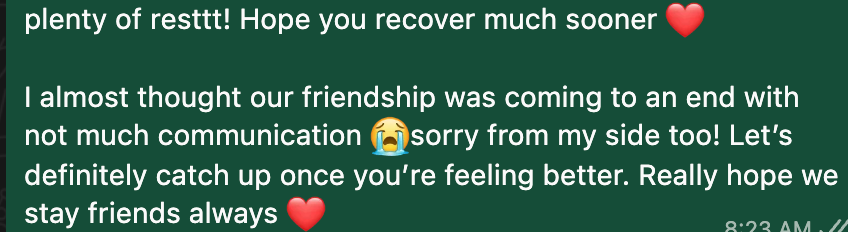
「ゆっくり休んでね!早く元気になりますように❤️
最近あまり連絡できなくて、もしかして友情が終わっちゃったのかなって思っちゃった😭
私のほうこそごめんね。元気になったらぜひ会おう!
これからもずっと友だちでいたいです❤️」
すぐに返事はなく、またいろいろ考え始めたら……。次の日、ピンッ!と。
「あいよー!なんでそんなこと思うの😣
今回は一緒に若い子が行くボリウッドのダンスイベントに行こうと思ってたのに〜😜」
そのメッセージを見て、思わず笑いながら泣きそうになりました。
その一言で、私の中の物語がやっと変わったんです。私は沈黙を「拒絶」と勘違いしていたんですね。みんな忙しいし、体調を崩すこともあります。でも、つながりはちゃんとそこにある。ただ、また動き出すのを待っているだけなんです。
大人の友情は「動き」から
そのとき読んだ記事の中に、心理学者のマリサ・フランコ博士の言葉がありました。彼女は『Platonic(プラトニック)』という本の中でこう言っています。
「友情は自然に生まれるもの」というのは、よくある思い込みです。
子どものころはそうかもしれませんが、大人になると仕事や家族、生活で精一杯。だからこそ、友情は「意識して作るもの」なんです。
フランコ博士は、「人は自分のことを好きだと思ってくれている」と信じることが大切だと言います。怖がらずに、あたたかい気持ちで人に近づけば、自然とつながりが生まれます。
勇気としての友情
誰かに連絡するのは勇気がいります。特に、自分ばかりが頑張っている気がするときは。でも、「元気?」とか「今度会おうよ」と言うことは、小さな愛の表現です。「私はまだ、あなたを大切に思っているよ」というサインなんです。そして、「会いたい」「少しさびしかった」と素直に言ってもいい。その正直さが、また友情を深くしてくれるから。
友情はアート
大人になってからの友情は、偶然ではなくアート(技)だと思います。見えない思いやり、がまんと優しさのバランス、そして「自分も大切にされる価値がある」と信じる心。友情は、ときに変わったり止まったりするけれど、たった一通の心のこもったメッセージで、また動き出すこともあると思います。
だから、みなさんもし今、「この友情はもう終わりかも」と思っているなら、どうか黙っていないで言ってみてはどうですか。
正直に。やさしく。あなたらしく。
きっと、相手も同じ気持ちで待っているかもしれません。
いつも読んでいただき、ありがとうございます!
Friendship as an Art of Effort
When you think back, did you have more friends as a child or as an adult?
As children, making friends was so easy.
We shared lunch boxes, passed little notes, and just saying, “Let’s be friends!” was enough.
But once we grow up, it starts to feel like climbing a mountain.
I’ve lived abroad for the past fifteen years. Now, I can count the friends I truly trust on one hand. I’m usually the one sending messages first or saying, “Let’s meet up!”. On bad days, I just wish someone would text me first.
A Friendship That Almost Drifted Away
I felt that feeling strongly during a recent visit home.
I was so excited to see my friends after a year, especially one I’ve been close to for over fifteen years; we even went clubbing together last year!
But this time, she didn’t read my messages for days, and our schedules never lined up. When I was free, she was busy; when she was free, I had other plans. As the trip was coming to an end, I started to think, “Maybe we won’t see each other this time.”
Then, just before I gave up, she finally messaged:
“Sorry, I caught a cold. I don’t think I can make it.”
My mind instantly switched to negative mode.
“Really? Or is that just an excuse? Maybe this friendship is over…”
I overthought everything.
I flew back feeling heavy, on the verge of tears.
Then, on social media, I saw photos of her having fun with other friends.
“So she really has forgotten about me,” I thought.
The Honest Message
Still, the thought of losing a friend hurt too much.
The feeling wouldn’t go away.
After coming back, I did what people do these days, I read articles, even asked ChatGPT for advice. And then I decided, even if it felt a little embarrassing, to send one more message this time, from the heart.
Here’s what I wrote:
There was no reply at first, and I started overthinking again…
Then, the next day, ping!

I stared at her reply, I laughed and almost cried.
That one short line completely changed my story.
I realised I had mistaken silence for rejection.
Everyone’s busy. People get sick.
But connections don’t disappear; sometimes they’re just quietly waiting to move again.
Friendship Takes Effort
In one of the articles I read, psychologist Dr. Marisa Franco, author of Platonic, said something that struck me:
“The belief that friendship happens naturally is a common misconception.”
As children, maybe that’s true.
But as adults, life gets filled with work, family, and responsibilities. That’s why friendship needs to be created intentionally.
Dr Franco says it’s important to believe that people like you.
If you approach others warmly instead of fearfully, connections will grow naturally.
Friendship as Courage
Reaching out takes courage, especially when you’re tired of being the one who always tries.
But every “Hey, how have you been?” or “Let’s catch up” is an act of faith, a small way of saying, I still care. I’ve learned that it’s okay to be honest, to say, “I miss you. I thought we were drifting apart.”
That honesty brought my friend and me closer again. Maybe that’s what all those articles meant when they said: Be open. Be vulnerable. Say it.
Friendship as Art
I’ve come to think that adult friendship isn’t a coincidence; it’s an art. An art of invisible kindness, a balance between patience and warmth, and the belief that you deserve to be cared for too.
Friendships may fade, pause or change, but sometimes, just one heartfelt message can bring it back to life, no matter how far apart we live.
So if you’re thinking right now, “Maybe this friendship is over,” please don’t stay silent.
Be honest. Be gentle. Be yourself. Say something. Reach out.
Chances are, your friend might be waiting with the same feelings, too.
Thank you so much for taking the time to read!
ラシュミさん、初めまして。
よい記事をありがとうございます。
久しぶりに何人かの友達に連絡をし、会う約束をしようかと思っていました。けれどもみんな忙しいかなとか、私のことはもうfadeしちゃったかなとか思って、勇気が出ませんでした。背中を押してくれてありがとう。連絡してみます。
Great Article Rashmi! I enjoyed reading it! I totally agree with what you said, especially this part "If you approach others warmly instead of fearfully, connections will grow naturally."
I tried to read in Japanese first, but I was really struggling. I am still early N3 level, but I could read and understand the first part, which made me really proud and want to continue studying Japanese.